
About Ocean Clear Carpets
Between 19 and 23 million metric tonnes of plastic are estimated to have entered the marine environment in 2016. That’s more than the combined weight of every single blue whale on Earth. As this plastic breaks down dangerous chemicals are released into the ocean. These damage not only the living organisms in the oceans, but also those on land when it makes its way back into the atmosphere through natural processes and then back to land via rain.
At Sisal & Seagrass we are always looking for new ways to have a positive impact on the planet we live in and share with nature. Previously we have had a strict “naturals only” ethos when it comes to what we sell, however, with recent improvements in technology and production, we are pleased to offer a new range we are calling Ocean Clear Carpets, that although stray from our natural selection, comply completely with our ambition of supplying sustainable, eco friendly flooring solutions.
This range is composed entirely of recycled fishing nets and plastic bottles from our oceans and landfills. The positive impact this can make on our environment is potentially massive. As we stated, the damage that plastic waste wreaks on our oceans and environment is catastrophic, and every bit we can do to help could be vitally important for the future of our world and generations to come.
Ocean Clear Carpets is a brand new range we are launching at Sisal & Seagrass.
Split into three ranges, Pacific is made from 100% recycled plastic fishing nets, while both Atlantic North & South are composed of 100% recycled PET plastic bottles. The carpets come in three distinct weave options, Herringbone, Panama and Cut & Loop, as well as several luxurious colour choices.
Although this range drifts from our usual natural product, it still rides the wave of our sustainable, eco-friendly model. Helping to clear the oceans of plastic waste one square metre at a time.
Atlantic Dolphin
Isn’t it on most people’s bucket list to see a dolphin close up glide through the ocean, or have one approach you, allowing you to pet it on its silky nose. But if we’re not careful there might not be many of these immensely intelligent animals left for us to have those life changing experiences with.
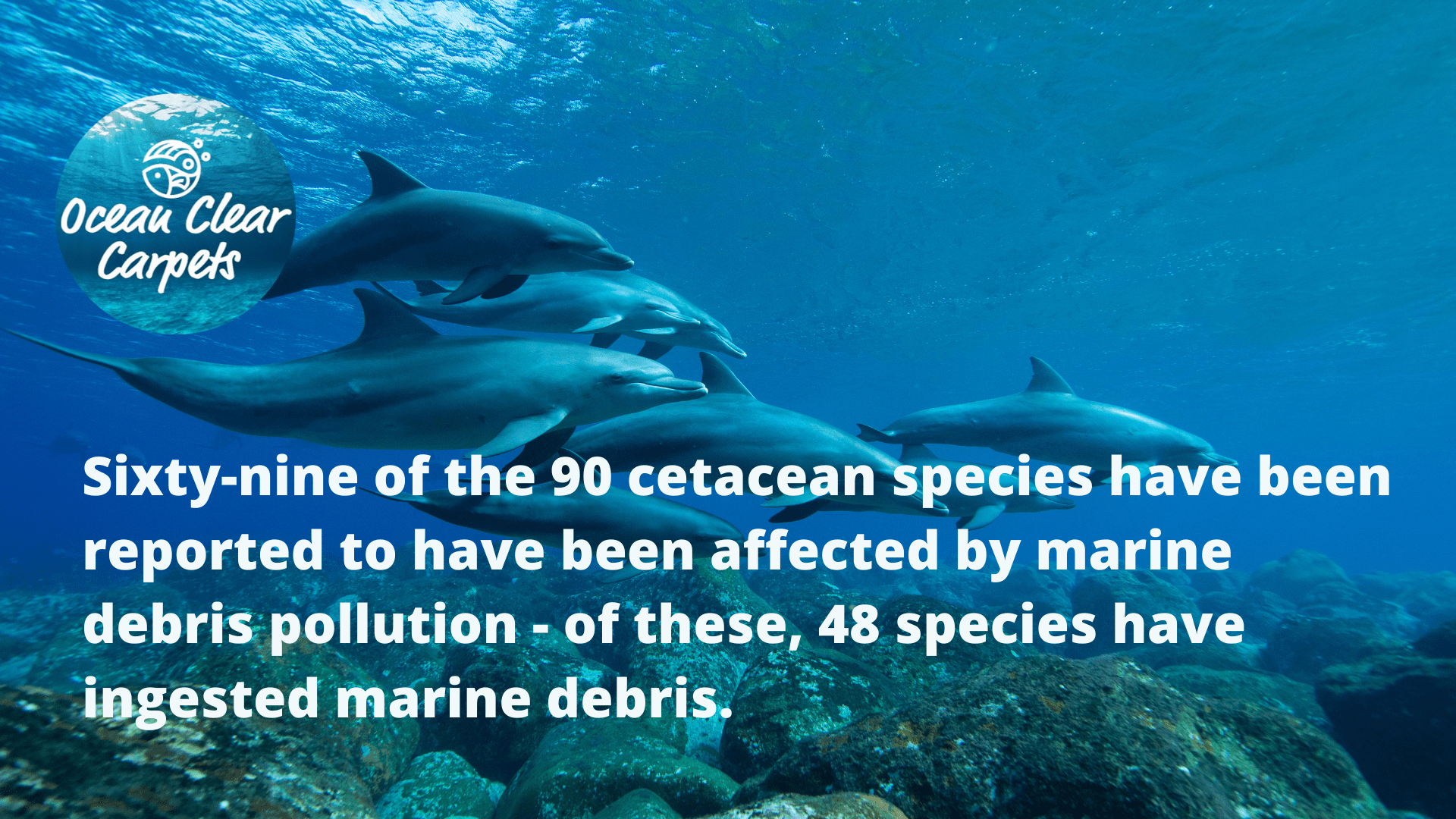
Plastics have been shown to have a very negative effect on whales’ and dolphins’ ability to feed, digest, navigate, breathe, breed and migrate. Unfortunately, It is estimated that 56% of the planet’s whale, dolphin and porpoise species have already consumed plastic.


Atlantic BEluga
Like us, whales and dolphins breathe air, so when they get tangled up in a net, rope or fishing line it can be a race against time to reach the surface or to escape. In their desperation to escape and avoid suffocation, or in getting tangled in gear, some tear muscles, break teeth, and sheer off fins. The more they struggle, the more entangled they can become, most of the time succumbing to death.
And it’s not just fishing nets that can be a problem for one of nature’s most fascinating creatures. Beluga whales ingest as many as 145,000 particles of microplastics a year due to the mass amounts of plastic waste and chemicals that make its way into our oceans.
Atlantic Octopus
Octopi look a bit different these days. And many creatures that use seashells as shelter against natural predators have also had a bit of a wardrobe change. With the human fascination of seashells creating a booming market for seaside shops, the oceans’ floors have become more and more stark. This has resulted in more and more octopi making their homes in discarded plastic bottles and cans.
You might think that’s a good thing, however the harmful toxins and chemicals they become exposed to while taking shelter within these man made atrocities is a fate far worse and more painful for these creatures than it might have been to simply be gobbled up by a big fish. Needless to say that the more these species die prematurely due to toxic pollutants the more their numbers will dwindle, affecting all of the oceanic food chain and in turn global warming.


Atlantic Seahorse
Did you know that a seahorse can move each eye independently? They do this so that they can watch for predators and prey. But these vigilant little ocean dwellers aren’t quite big enough to take on the role of neighbourhood watch to keep plastic polluters away.
Similar to our Octopus friends, with plastic suffocating the seafloor where seahorses live they are being pushed out of their normal habitats. Unfortunately, they have sometimes even been seen clinging to this pollution as their home putting them at risk of being in constant contact with the dangerous toxins and chemicals that our trash absorbs and holds.
Atlantic Seal
Who doesn’t find Seals cute? They are like the ocean’s dog! At least that’s how I think of them. However, as adorable as they are, their little flippers and sweet whiskers can’t save them from the global plastic crisis.
Once entangled in this plastic waste, seals cannot help themselves. As they grow, the plastic waste will tighten around the seal’s neck, flipper or mouth, leading inevitably to a gruesome death. All seal entanglements are caused by negligent human behaviour.


Atlantic Turtle
We have all seen various pictures of wise and majestic sea turtles caught up in stray plastic nets but there is more to the plastic pollution problem when it comes to its impact on sea life.
Research suggests that 52% of the world’s turtles have eaten plastic waste. The reasons are simple: a floating plastic bag can look like a lot of jellyfish, algae, or other species that make up a large component of the sea turtles’ diets. All sea turtle species are at risk from plastic.
Pacific Abyss
When talking about an abyss in the ocean the first one that comes to mind is the king of them all, the Mariana Trench, and if you thought the trench could escape the global onslaught of plastics pollution, you would be wrong.
A recent study revealed that a plastic bag, like the kind given away at grocery stores, is now the deepest known piece of plastic trash, found at a depth of 10,975 metres (36,000 feet) inside the Mariana Trench.


Pacific Kelp
Kelp is a large brown seaweed that typically has a long, tough stalk with a broad frond divided into strips. Here’s a change of pace, a positive factoid!
Biotech start-up PlantSea, is researching and developing how it can use seaweed to create material for a variety of uses, including food packaging.
“We see the potential in seaweed replacing part of the plastic currently used in any sort of application,” said Gianmarco Sanfrantello, from PlantSea.
“Seaweed is a renewable resource and there is plenty on our seas.
“We are aiming to turn the tide of plastic pollution.”
Pacific Lunar Tide
Lunar tide. Why does it sound so cool and what does it mean!?
Lunar Tide is the part of a terrestrial tide due to the mutual attraction between earth and moon.
Want another fact to do with the ocean and the moon?
Plastic debris equivalent to a string of plastic bottles stretching to the moon and back is adrift in the Earth’s oceans, a new study has shown. Sorry that was a little more bleak, unfortunately that is the state of the world we have all contributed to making.


Pacific Sandbar
Sandbar is defined as a long, narrow sandbank. Doesn’t that sound inviting, sitting along a sandbar looking out into the warm ocean… but what’s that uncomfortable feeling under your beach towel? Oops you just sat on a plastic bottle left on the beach, well that sucks!
Plastic accumulating in our oceans and on our beaches has become a global crisis. Billions of pounds of plastic can be found in swirling convergences that make up about 40 percent of the world’s ocean surfaces. At current rates plastic is expected to outweigh all the fish in the sea by 2050.
Pacific Sea-mist
Research has suggested that Microplastics expelled via sea-mist (mist expelled from the sea) may be propelled into our atmosphere, what does this mean for us though?
Inhalation or ingestion of microplastics may cause tissue inflammation. Furthermore, the release of hazardous chemicals and microorganisms from the microplastics surface might increase the risks to human health. Knowledge of airborne microplastics currently remains limited.


Pacific Spindrift
What is Spindrift? Spray blown from the crests of waves by the wind.
When setting up ocean clear carpets we wanted not only to help with the plastic crisis impacting our oceans, but also to spread information about the facts of what this pollution does to our planet and wildlife.
It can be quite a difficult link to find when it comes to natural processes link spindrift which as stated above is simply a term used for a very specific effect the waves and wind have on each other.
So you’ll just have to settle for this (and we hope you appreciate it because it took a while to find this but..) did you know that back in 2013 a concept design for a ship that would help combat plastic pollution was proposed? It was to be named Spindrift… (hold your applause)
Read more about this concept here https://gcaptain.com/spindrift-plastic-debris-research-vessel/