In the world of natural carpet materials it is common for the unindoctrinated to wonder about the differences between natural flooring fibres and the best uses for each one. But when it comes to wanting a natural rug or carpet we often get asked “which is better jute or sisal?”.
This is not such a straight forward question to answer however. It mostly comes down to subjective opinion, but to help you decide we will go over their key differences.
Sisal rugs and carpets
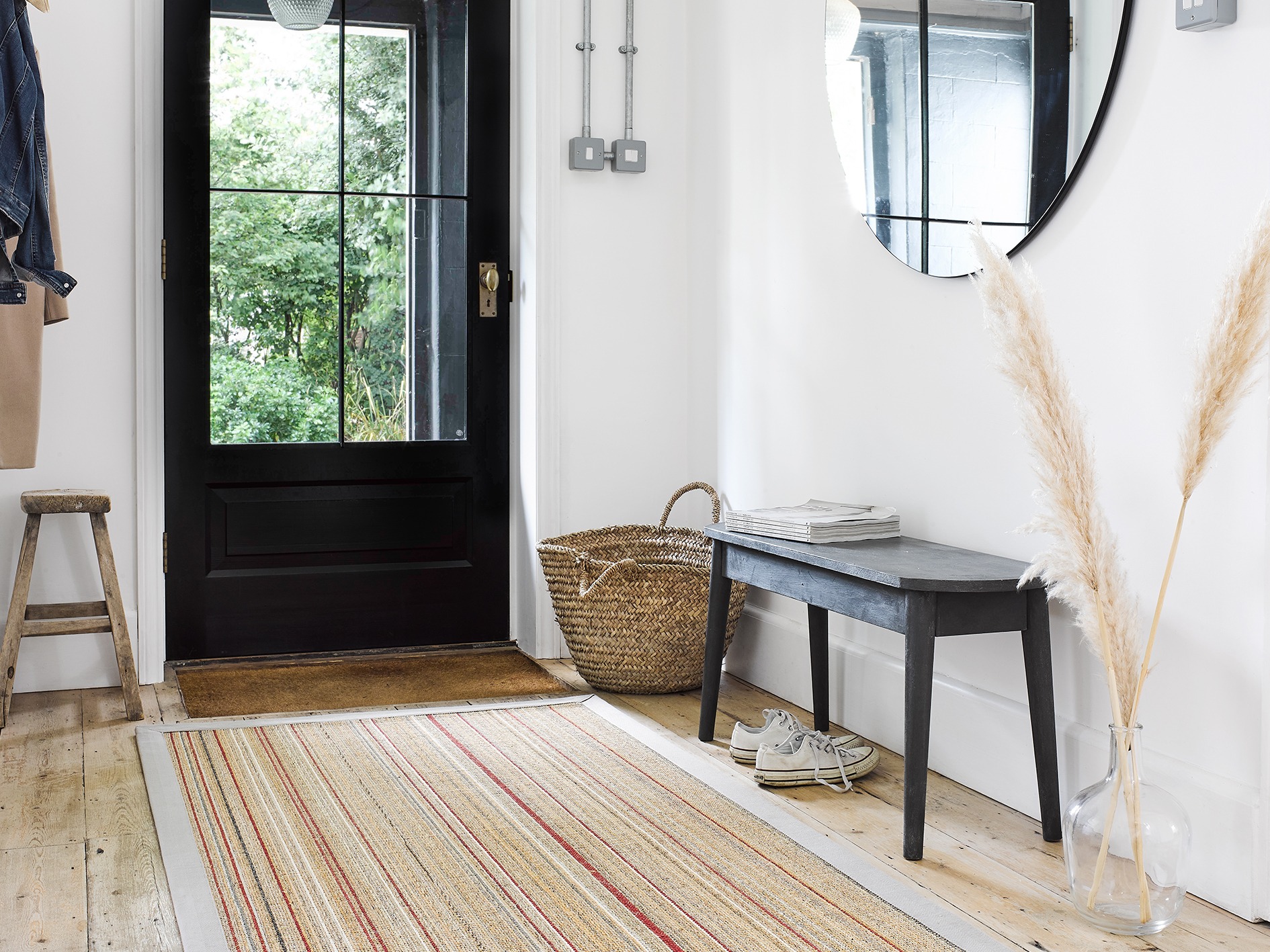
Sisal exhibits remarkable versatility as a material, offering not only a wide range of colour options but also the ability to be woven into various carpet designs. This is in contrast to jute carpet where it is rare to find mass produced jute flooring that has been coloured.
According to a blog by theflooringlady.com
“When choosing natural fibres, you are choosing to provide a healthier environment for yourself and your family.”
The benefit being referred to here is that natural fibres make for great non-toxic carpet options. Our blog on The Benefits of Non-Toxic Flooring goes into great detail on why its time to start considering better carpet options for air quality.
So lets look at some of the other pros and cons of using sisal carpets in your home.
Pros:
- VOC (volatile organic compounds) and chemical free
- Durable and long lasting
- Textured looks
- The colourways are made from vegetable dyes
- Sisal is a sustainable material
- Moth, larvae and dust mite proof
Cons:
- Does not react well to spills if not treated with Intec stain treatment
- Can feel rough for some people
- Finding a carpet fitter can be hard
Although sisal carpet is a growing market, are still somewhat niche. Addressing some of these pros and cons is important to helping educate potential buyer on these wonderfully sustainable carpets.
The pros are pretty self explanatory. The fact that they are non-toxic is a great relief for buyers with chemical sensitivities or those wanting cleaner air in their home.
In terms of durability sisal carpets are capable of lasting up to 10-15 years and sometimes longer if they are kept well. See our natural carpet care and cleaning kits to ensure your sisal carpet always looks its best.
The sustainability of sisal flooring and rugs is another big factor. Farmed from renewable agave plants and unlike standard carpets, sisal is biodegradable at the end of its life cycle.
In terms of the cons of sisal rugs and carpets it is important to know that they are all solvable with our help and advice.
Spills:
When it comes to spills sisal is known for absorbing liquid quickly which can lead to unsightly marks. This is why on all our carpets we make sure include as standard a stain protection called Intec. Our stain solution is sprayed onto the carpets directly as they are cut to size or made into rugs. The solution itself is completely water based and so still keeps to our policy of chemical free, natural carpets.

Prickly Feeling:
One of the first things people new to sisal flooring tell us is that it can feel a little prickly. For some people this is a reason they buy sisal in the first place. A feeling of bringing your feet back to nature. For others though it can be a little disconcerting. We are here to tell you though that this is not something that lasts.
Those prickly bits of sisal that are often noticeable when you first buy a new natural floor covering are only temporary. After a few goes over with the hoover the rug or carpet becomes significantly softer and smoother. Why is this? Simply put, some fibres come loose during the manufacturing process of being weaved. This means a few of those fibres stick out, but they come out pretty easily once hoovered.
This doesn’t mean that all the fibres on your sisal rug will come loose by the way. It is only those ones that didn’t quite get sewn into the weave that are able to be easily pulled out. In fact, sisal carpets are actually fantastic for cat owners, because they can pull at them with their claws without damaging them.
Finding a Natural Carpet Fitter:

Carpet fitters can be tricky to find when it comes to sisal flooring. We understand this can be one of the biggest challenges for those who want this type of flooring.
Over the years we have accumulated many contacts for sisal carpet fitters. This means all you have to do is contact us with your full address and contact details. After we have your information we look through our list of trusted professionals and get someone to contact you for measurement.
The fitter will then estimate the works and pass the details to us. Going forward we work with them to make the project as easy as possible.
Read our Comprehensive Guide On How To Measure For Carpet Installation and learn how to get started yourself.
Jute Flooring
Our natural carpet product information page says this of jute.
“Jute is ideally suited to low traffic areas like bedrooms and should not be used in high moisture areas such as bathrooms or kitchens.”

Jute is probably the most popular of all the natural carpet options and often the one most people have heard of. Although it has some similarities to sisal it also has many differences. Lets look at the pros and cons for jute carpet.
Pros:
- By far the softest of the natural carpet choices
- Non-toxic and chemical free
- Made from a sustainable material
- Easier to fit for installers
- Moth, larvae and dust mite proof
Cons:
- Only rated as light domestic use
- Like sisal it can stain easily if untreated
- Not as easy to find with colour variety
In the same way that sisal is free of harmful chemicals and sustainably sourced, so is jute.
Also much like sisal, jute flooring is also moth, larvae and dust mite proof. These annoying little critters simply don’t eat natural fibres and they also do not create dust like many other carpets. This makes them perfect for a bedroom carpet as most people store their clothes in their bedroom. The reduction in moth presence will mean you find less holes in your favourite garments.
A huge advantage jute can have over sisal is that it is generally easier to install. Sisal tends to expand and contract under temperature changes, meaning that the method of fitting is what is called a double stick method. It is not unusual to find experienced carpet fitters who for these reasons wont fit sisal.
However, jute does not encounter this issue. It does not react the same way to temperature changes and is typically more malleable. This means you will find it much easier to find carpet fitters in your area happy to take the job on.
Perhaps the biggest attraction for jute is that it is considerably softer than that of sisal, or even other options like seagrass carpet.
This makes it a very popular choice as you don’t need to worry about breaking out the hoover several times to allow it to feel just as cosy underfoot.
We have addressed some of the pros, now lets look at the cons of jute carpet and what can be done about them.
Not as Durable:
Despite its supreme softness this does come at the disadvantage of being slightly less durable than that of sisal. Jute would typically hold up perfectly well for 10+ years, but in order to make sure it does not wear out prematurely, we advise caution when using it in certain rooms.
The basic rule of thumb that we advise our customers is to only have it laid in low foot traffic areas. This means places like bedrooms and studies. We never advise using jute carpet on stairs or in living rooms that encounter lots of people as that can cause issues over time. Read more on the best carpets for staircase runners if you are looking to decorate your hallways and stairs.
Easy to Stain:
As with sisal, jute can be easy to stain. Once again, we always advise opting to keep Intec stain treatment on your carpet order so that your new carpet has the best chance.
Intec creates a barrier between the carpet and the substance being spilled on top of it. It is not entirely fool proof, but it will allow you more time to tend to the stain correctly before it soaks into your carpet.
Less Colour Variety:
Neutral is the new fad in interior design colour choice, and luckily for jute that plays right into this weakness. Jute as a material is able to take on colour through dyes in the same way that sisal is. But for some reason it is not generally produced for rolls of room size carpet with these dyes on in the same frequency as sisal.
This is something that is mainly dictated by industry. Jute rugs are typically very cheap to produce and for that reason are mass produced at source. This leads to lots of low quality jute rugs being available on the market, but the higher quality room size jute carpet is not as commonly dyed.
Although not available in as many colours there are still three great choices on our website for variety in weft. These choices are:
With neutral tones seemingly forever in fashion, we don’t see this lack of colour options as much of a downside anyway. We look at it more as a helpful way to create a blank canvas for the rest of your interior design choices. Neutral tones are fantastically versatile and gives other elements the ability to pop. So if you have a brightly coloured or stylish accent chair, or feature piece of art, jute carpet might be perfect for you.
So, Which is Better Sisal or Jute?

If you want the softest possible natural carpet go for jute. If its something more durable, versatile with more choice of colours pick sisal.
Always remember that jute is most suitable for lower traffic areas. Sisal carpet on the other hand is not only useable for all areas except those that are damp, but also is typically higher pile and bouncier underfoot.
If you’re still looking to expand your knowledge on sisal carpets read our blog on Sisal Carpet: Addressing Your Common Questions. Or if you are considering incorporating a natural rug into your space read about Our 5 Favourite Natural Rug Combinations.